
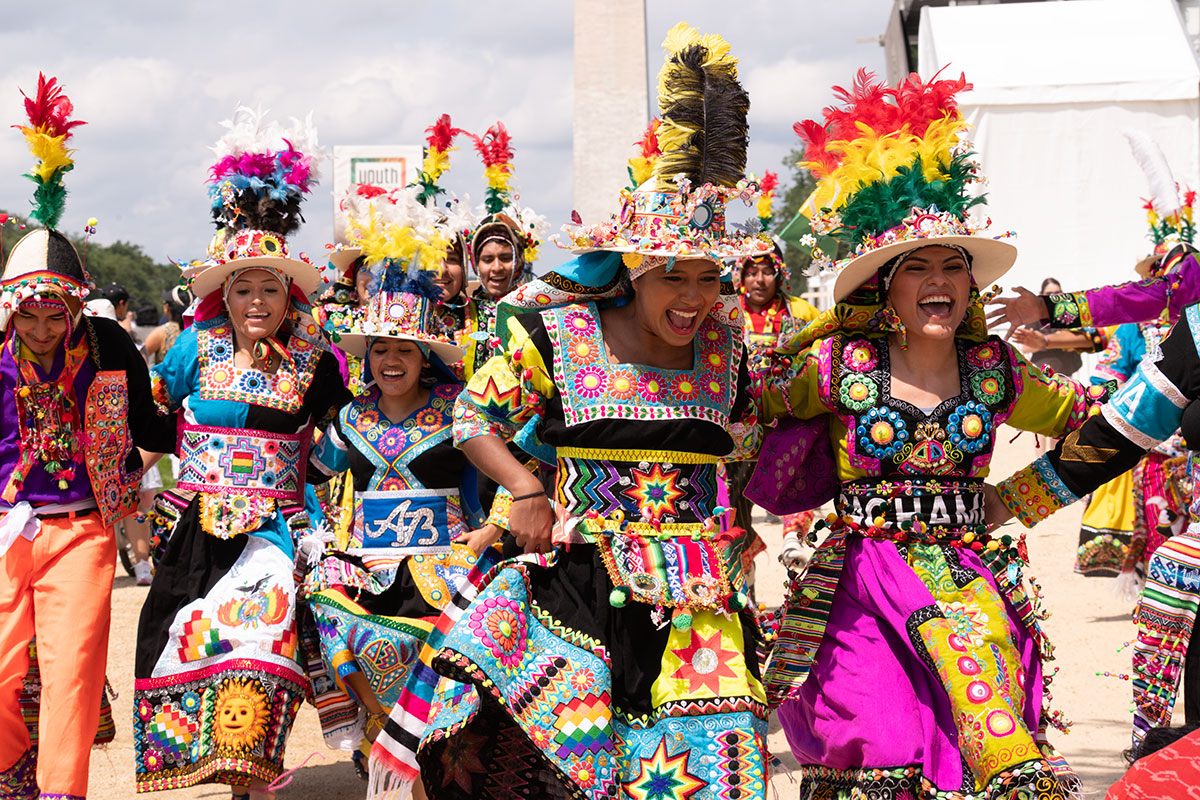

A Fusion of Heritage and Rhythm: Dance as Cultural Expression
Dance holds a unique power to convey stories, traditions, and identities across generations and geographies. This is vividly illustrated through the lively Bolivian tinku and the graceful Hawaiian hula, both traditional dance forms showcased at the Smithsonian Folklife Festival in 2025.
The Energetic Bolivian Tinku: A Community Affair
Originating from the Indigenous Quechua term tinkuy, meaning “to come together,” the tinku dance embodies unity and shared cultural heritage. At the festival, three Bolivian dance fraternities from D.C., Maryland, and Virginia demonstrated this tradition, reflecting the strong Bolivian-American presence in that region. Participants wear vibrant costumes, including embroidered dresses and feathered hats, moving with precision and communal spirit as music pulses from flutes and drums.
Learning tinku is a collaborative experience, led by guides called guías, who signal dance moves through whistles and hand gestures. This peer-led approach fosters a sense of community, where dancers imitate steps in an immersive, supportive environment without formal instruction—highlighting the Andean cultural value that no individual stands above another in the collective.
The Dance Steps and Cultural Unity
| Dance Element | Description |
|---|---|
| Guía Leadership | Leaders use whistles and hand signals to direct the dance sequence. |
| Step Duration | Each movement lasts around fifty seconds, repeated until a new signal. |
| Community Learning | Dancers learn from each other, enhancing unity and expanding style versatility. |
This collective participation encourages growth in skill and reaffirmation of cultural roots through costume symbolism, dance vocabulary in Indigenous languages like Quechua and Aymara, and shared heritage.
The Graceful Hawaiian Hula: Storytelling Through Movement
Across the festival grounds, Hawaiian culture came alive with the mesmerizing hula, performed by students of Hālau I Ka Leo Ola O Nā Mamo, a hula school deeply rooted in the Hawaiian language (ʻōlelo Hawaiʻi) and tradition. Six girls, adorned in red dresses and yellow leis, executed precise hand movements accompanied by feathered gourds and Hawaiian chants, guided by a kumu hula or hula teacher.
This dance style is not only an art form but also a bridge to ancestral knowledge, where songs narrate stories and preserve historical memory. The school’s founder, Pelehonuamea “Pele” Harman, emphasizes that hula serves as a living vessel, connecting generations and preserving language vitality.
Hula as Cultural Preservation
- Language-Centric Teaching: All instruction occurs in Hawaiian, reinforcing cultural immersion.
- Genealogical Legacy: Performing original compositions honors the legacy of Hawaiian scholars and educators.
- Cultural Ambassadorship: Performers act as representatives not just on stage but through personal interactions.
The significance of performing hula in the U.S. capital on the Fourth of July resonated deeply with performers, symbolizing both pride and responsibility in sharing Hawaiian heritage on a global stage.
Why Cultural Dance Festivals Matter in Today’s World
These dance traditions, whether the dynamic tinku or the poetic hula, represent more than entertainment—they are pathways to maintaining identity, sharing history, and building community cohesion. Through such cultural exchanges, festivals foster mutual respect and understanding among diverse spectators and participants alike.
Local Dance and Global Connections
For travelers and enthusiasts keen to experience authentic cultural expressions, ease of access to these events often depends on trusted transport and transfer services. Platforms like LocalsRide.com provide a unique advantage by allowing users to select vehicles tailored to their group size and preferences, check detailed information about drivers including ratings, and secure transparent pricing—ensuring a hassle-free journey to and from cultural festivals.
Summary: Embracing Culture and Convenience
In summary, Bolivian tinku and Hawaiian hula dances offer immersive insights into Indigenous heritage, collective identity, and living artistry. Their representation at national events underscores the importance of dance in cultural preservation and intercultural dialogue.
Choosing convenient and reliable transport, like that offered through LocalsRide.com, complements the festival experience by ensuring punctual arrivals, comfortable rides, and transparent fares, whether visiting from near or far.
Experience is the Best Teacher
While reading about these vibrant dance traditions sparks interest, nothing quite compares to witnessing them firsthand. On LocalsRide, car hire options from verified providers empower travelers to enjoy their cultural explorations affordably and seamlessly. With various vehicle types, competitive prices, and easy-to-navigate booking, you can focus on soaking in every moment without the stress of transportation logistics. Get the best offers LocalsRide.com.
The Future of Cultural Tourism and Connectivity
Although these dance traditions may not reshape the entire global tourism map, their vibrant presence enriches cultural landscapes wherever they are celebrated. LocalsRide remains committed to supporting travelers who seek meaningful connections through their journeys by offering up-to-date, personalized transfer services that keep pace with evolving travel needs. Start planning your next adventure and secure your worldwide transfer with LocalsRide.