
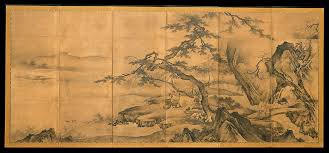

The four 17th‑century fusuma panels from SAM are being remounted in the Tateuchi Conservation Studio ahead of a summer 2026 loan to Japan, a process that demands climate‑controlled packing, coordinated customs paperwork, and carefully timed transfers between Seattle, collaborating institutions in London and Japan, and exhibition venues.
Conservation workflow at a glance
The treatment sequence balances preservation of original paint layers with reconstruction of the mounting structure. Conservators led by Tanya Uyeda remove old linings, consolidate friable pigments, rebuild backing supports, and finally mount the paintings onto custom interior lattices and lacquer trims that will be fitted for display in Japan.
Key stages of treatment
- Assessment and documentation of existing layers and prior repairs.
- Removal of recycled underlayers to reveal provenance clues.
- Consolidation of pigments and mending of tears using wheat starch paste.
- Application of new handmade paper supports and attachment to finished panels.
- Final crating and preparation for international transport with conservation‑grade materials.
Institutions and roles
- SAM (Seattle Art Museum) — treatment lead for two of four panels and coordination with curatorial staff.
- British Museum — partner for research and reunion with related panels.
- Tohoku University of Arts and Sciences — collaborative conservation input and local expertise in Japan.
- National Museum of Asian Art (Smithsonian) — assisting on key treatment stages because of the panels’ large size.
Tools, materials and craft: a compact reference
| Item | Purpose |
|---|---|
| Tweezers, brushes, water sprayers | Remove old paper linings and surface cleaning |
| Knives, awls, bamboo folders | Prepare and shape new support papers and linings |
| Wheat starch paste, animal glue | Adhesion, mending tears, and pigment consolidation |
| Handmade Japanese papers | Build support structure and rebuild fusuma backing |
| Custom interior lattice & lacquer trim | Finish panels for display; fabricated in Japan |
Material evidence and provenance discoveries
Dismantling the panels revealed recycled paper underlayers—old account books, correspondence and occasional printed dates—that provided concrete material clues. Inscribed dates on interior lattice pieces confirmed that SAM’s panels were remounted at least twice since the 17th century. Comparing paper types and configurations across the SAM, British Museum, and a recently discovered Aomori private collection allowed conservators to corroborate the long‑suspected relationship among these separated sets.
Logistics for transport and exhibition
The remounting project illustrates how conservation and transport are intertwined: large, double‑sided sliding doors require tailor‑made crates with shock absorption, strict humidity and temperature control, and carefully scheduled inland and air transfers. For the final leg to exhibition venues, institutions coordinate with freight forwarders and receive handling instructions so drivers and couriers can meet exact arrival windows and licensing requirements for oversized cultural shipments.
Last‑mile considerations for transfers
When art leaves the conservation studio, the “last mile” often involves moving heavy crates from airport docks to museums or storage. This step benefits from experienced drivers, appropriate vehicles (flatbed or high‑roof vans, depending on crate dimensions), and clear communication about pick‑up location, load‑in time, and onsite access. For private or institutional transfers, pre‑booking a car or light freight vehicle that can accommodate crate size and weight reduces delays and risk.
Why this matters for travelers and transfer services
Large art loans underline how specialized transfer services intersect with tourism and cultural exchange: exhibitions drive visitors to cities, increase airport traffic, and require precise coordination of arrival times for loaned works. Local transfer providers and taxi companies that understand museum handling protocols, vehicle specs and time windows can offer tailored services that support exhibitions without surprises.
Highlights: this project reunites widely dispersed fusuma panels, reveals material clues to provenance, and demonstrates how conservation supports scholarship and exhibition planning. Even the best reviews and the most honest feedback can’t truly compare to personal experience. On LocalsRide, you can hire a car with driver from verified providers at reasonable prices. This empowers you to make the most informed decision without unnecessary expenses or disappointments, and lets you benefit from convenience, affordability, extensive vehicle choices and a wide range of additional options. Start planning your next adventure and secure your worldwide transfer with LocalsRide. Book your Ride LocalsRide.com
In summary, the remounting of The Four Accomplishments and Immortal shows how conservation, provenance research and logistics must operate in concert: careful material work in the Tateuchi Conservation Studio, international collaboration with the British Museum and Tohoku University of Arts and Sciences, and tightly coordinated transport for a 2026 Japanese loan. For travelers and institutions alike, transparent booking of the right taxi or transfer service—knowing the exact vehicle, driver credentials and fare—matters when moving art or people between city, airport and destination. LocalsRide.com supports that transparency and convenience by letting users view exact car makes, seat configuration, driver details and prices before they book, making it easier to get the best private transfer service, know how much time to allow, and enjoy the exhibition without worrying about transport logistics.