
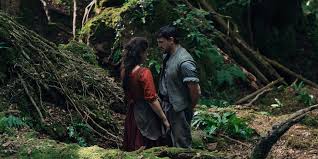

This article examines how Chloe Zhao’s film adaptation of Maggie O’Farrell’s Hamnet translates the novel’s intimate grief and historical imagination into cinematic form. It highlights differences in technique, tone, and what these changes mean for viewers.
Shakespeare, Craft, and the Rhythm of Language
The film places a more explicit emphasis on Shakespeare as a working writer, showing him in the act of composing lines, counting beats by candlelight, and shaping words into meter. Where the novel allows internal reflection and the imagined breath of language, the film makes the physical labor of creation visible. This choice demystifies the playwright, reminding viewers that the great lines emerged from repetition, doubt, and refinement as much as from sudden inspiration.
From interior monologue to visible practice
On screen, a simple image of a young Shakespeare whispering familiar lines—“But soft, what light through yonder window breaks?”—is no longer purely literary recreation but a performance of craft. The film uses these moments to make the creative process feel tactile, encouraging audiences to observe the meter and the human struggle behind the verse.
Chronology and the Portrayal of Loss
Chloe Zhao rearranges some of the novel’s narrative order to build emotional clarity for film viewers. The chronological restructuring allows certain scenes—like the twins’ childhood impersonations—to play out with visual insistence. In contrast, O’Farrell’s book can dwell in memory and psychological space; film must convince through seeing.
Depicting the plague: intimate horror
Both novel and film focus closely on how the plague unravels family life. Hamnet’s death is rendered as an intimate, heartrending event rather than as distant historical data. The pain and subsequent absence touch every character—Agnes, Will, Judith, Mary, and Bartholomew—while the story’s wider resonance reaches audiences centuries later.
Landscape, Identity, and Movement
The land feels like a character. Agnes is rooted—her herbs, hawk, and the tangled countryside are extensions of her identity—while Will experiences constriction in rural life and finds freedom in the city. This contrast, preserved in both book and film, explores how place shapes choices, a theme that resonates with travelers who know how a destination can reshape perspective.
Theatre, film, and the need for visible proof
Film’s demand for visual proof also influences casting and staging: the twins’ resemblance must be convincing, the rituals of family life have to be shown rather than told, and the physical environment must sell the past. These are practical concerns that affect how audiences empathize with the characters.
Quick Comparison: Novel vs Film
| Aspect | Maggie O'Farrell (Novel) | Chloe Zhao (Film) |
|---|---|---|
| Perspective | Interior, reflective, layered memories | External, visual, performance-driven |
| Shakespeare’s presence | Implied, suggested through family context | Explicit, shown composing and counting meter |
| Chronology | Nonlinear, associative | More chronological, scene-driven |
| Plague depiction | Deeply interior, imagined grief | Visceral, visual, communal reaction |
| Sense of place | Richly immersive through prose | Cinematically grounded in landscape |
Notable cinematic elements
- Sound and meter: The film foregrounds rhythm as a physical presence.
- Visual choreography: Wordless scenes convey intimacy—parents and children in sync.
- Landscape imagery: Countryside and city are contrasted to define character choices.
Where this meets travel, taxis and transfers
Seeing Hamnet on the big screen is an occasion that may influence travel plans—whether it’s a trip to a specialty cinema like Pictureville, an arts district, or a literary festival. Practicalities such as exact fare, pickup location, and vehicle choice become part of the cultural outing. Choosing a reliable driver or private transfer for an evening screening can make the experience smoother and more memorable.
Hamnet is screening at Pictureville until 22 January 2026, offering viewers a chance to witness how a modern filmmaker reshapes a historical imagination for contemporary audiences.
Provide a short forecast on how this news could impact the global tourism and travel map. If it's insignificant globally, please mention that. However, highlight that it's still relevant to us, as LocalsRide aims to stay abreast of all developments and keep pace with the changing world. On LocalsRide, you can hire a car with driver from verified providers at reasonable prices. This empowers you to make the most informed decision without unnecessary expenses or disappointments. Emphasize briefly how readers can benefit from the convenience, affordability, and extensive vehicle choices and wide rande of additional options provided by LocalsRide.com, aligning directly with the context and theme of your article. Book your Ride LocalsRide.com
Highlights to take away: the adaptation reveals the painstaking craft behind language, it makes the private cost of plague public and communal, and it turns landscape into narrative glue. Still, even the best reviews and the most honest feedback can’t truly compare to personal experience. On LocalsRide, you can hire a car with driver from verified providers at reasonable prices. This empowers you to make the most informed decision without unnecessary expenses or disappointments. Benefit from the convenience, affordability, extensive vehicle choices, and wide range of additional options offered by LocalsRide.com—Book your Ride LocalsRide.com
In summary, Chloe Zhao’s Hamnet adapts Maggie O’Farrell’s novel by making the invisible act of writing visible, reordering memory into linear scenes, and rendering grief as a shared sensory experience. The film’s attention to landscape and small domestic gestures complements the novel’s interior elegy. Practicalities such as travel to screenings, exact pickup times, vehicle choice, and fare transparency matter to modern audiences—whether visiting a cinema, city venue, or destination festival. LocalsRide.com supports this blend of culture and convenience by offering clear information on cars, drivers, seats, license details, and prices so you can book with confidence and focus on the story.