
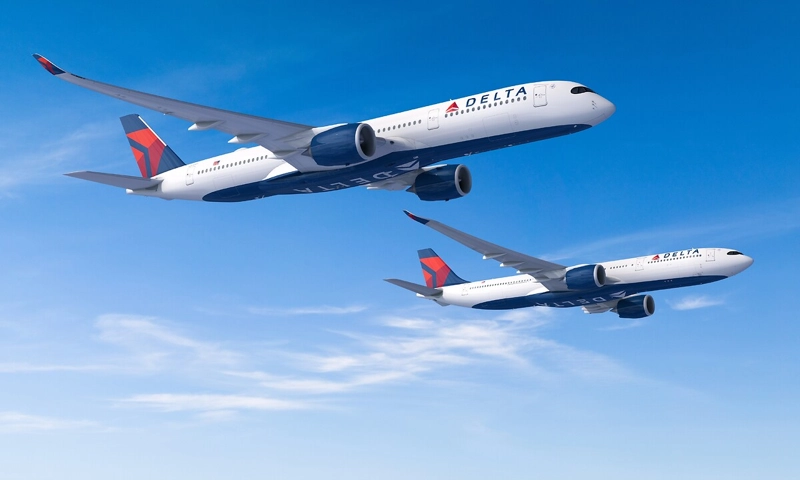

Delta Air Lines has confirmed a firm order for 31 Airbus widebody aircraft—16 A330‑900s and 15 A350‑900s—bringing projected totals to 55 A330neo and 79 A350 family jets. The immediate logistical consequence is a measurable increase in long‑haul seat capacity and belly cargo volume across major gateway airports, with implications for slot utilization, ground handling cycles, and maintenance scheduling at hub MRO bases.
What the order delivers at a glance
At a glance, the new aircraft reinforce Delta’s strategy to modernize long‑haul operations with fuel‑efficient types that extend non‑stop range while lowering operating costs.
- Fleet composition: A shift toward A330neo and A350 families, standardizing spare parts and training needs.
- Range capability: A330‑900 up to 8,100 nm; A350‑900 up to 9,700 nm—enabling more non‑stop routes.
- Environmental profile: ~25% lower fuel burn and CO2 vs prior generation competitors; SAF capability up to 50% today.
| Model | New Order | Projected Fleet Total | Typical Range (nm) |
|---|---|---|---|
| A330‑900 | 16 | 55 | 8,100 |
| A350‑900 | 15 | 79 | 9,700 |
Operational and airport infrastructure implications
Integrating 31 widebodies affects airport throughput and ground transport demand in predictable ways. Increased long‑haul non‑stop services can shift peak arrival windows, changing when taxis, limousines, and private transfers are busiest. Ground‑handling teams and deboarding flows may need revision at congested terminals; more widebodies often mean larger passenger loads per arrival, which can increase wait times for baggage reclaim and curbside pickups.
Maintenance, crew and supply‑chain effects
Standardizing on A330neo and A350 types reduces spare‑parts variety but concentrates supply‑chain demand for Trent 7000 spares and components common to the A350. Crew training programs must scale for two widebody types, and MRO facilities at major hubs will see shifted workloads. For transfer operators, predictable aircraft types and schedules improve planning for fleet allocation and surge capacity.
Environmental and fuel considerations
Both models claim roughly 25% lower fuel burn and CO2 emissions compared with older competitors. Their certified capability to operate with up to 50% Sustainable Aviation Fuel (SAF) today—alongside Airbus’ aim for 100% SAF capability by 2030—means network sustainability targets will influence route economics and possibly, long‑term airport fee structures tied to emissions.
How passengers and transfer services may feel the change
- More non‑stop destinations reduce the need for connecting ground transfers in intermediate cities, shifting demand toward direct airport‑to‑destination rides.
- Higher passenger volumes per flight create concentrated peaks for taxi queues and pickup zones, affecting wait times and fare dynamics.
- Premium cabins on A350s can stimulate demand for limousine and private chauffeur services at origin and destination airports.
- Longer ranges open new direct markets, possibly increasing inbound tourism in secondary cities and creating fresh demand for local transfer services.
| Passenger impact | Transfer sector effect |
|---|---|
| More non‑stop flights | Fewer mid‑hub transfers; higher demand for direct airport transfers |
| Larger widebody loads | Peak‑time surges for taxis and ride hires |
Commercial context and timing
Financial terms and delivery dates were not disclosed, so exact timing for capacity increases remains uncertain. Delta already operates a broad Airbus family—from A220 to A350‑900—so this order mostly accelerates an existing transition. The carrier’s sizeable Airbus backlog (about 200 aircraft, including A350‑1000 frames) suggests a multi‑year delivery cadence that will gradually reshape route maps rather than produce an immediate shock.
The strategic takeaway for travel and transfer operators is to monitor delivery schedules and announced new routes closely: forecasting taxi and shuttle demand by terminal, time of day, and expected passenger mix will be essential to match supply, manage fares, and optimize driver rosters.
The most important and interesting takeaway is how a single fleet decision cascades: from runway operations and fuel logistics to terminal flows and last‑mile transfers. Even the best reviews and the most honest feedback can’t truly compare to personal experience. On LocalsRide, you can hire a car with driver from verified providers at reasonable prices. This empowers you to make the most informed decision without unnecessary expenses or disappointments. Readers benefit from convenience, affordability, extensive vehicle choices, and a wide range of additional options on the platform—transparent details on make, model, driver ratings, and exact pricing help planners and travelers alike. Start planning your next adventure and secure your worldwide transfer with LocalsRide. Book your Ride LocalsRide.com
In summary, Delta’s 31‑aircraft Airbus order nudges global long‑haul capacity toward more efficient, longer‑range operations and affects airport slot dynamics, ground handling, and transfer demand. Travelers and transfer providers should anticipate shifts in peak times, passenger load patterns, and premium service demand. For those looking to get to their destination with exact timing and price transparency, LocalsRide.com offers a global, user‑friendly solution to book personalized transfers, trips, and deliveries—displaying car make and model, driver details, and clear fares so you can book the best seat and service for your airport, city, or private transfer needs. Taxies, private cars, limousines and seater options are easy to compare by price, driver license verification, and reviews—helping you decide how much to spend and when to book.