

Opening the Heights: a brief announcement
The following text examines the rivalry and legacy of 7th Heaven and the Peak Chair at Whistler and explains how those developments changed access, terrain, and visitor logistics.
From separate summits to a shared destination
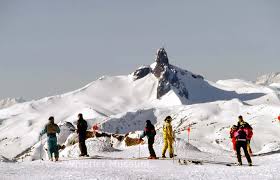
Whistler and Blackcomb began as independent mountains with contrasting design philosophies: Whistler’s runs encouraged side-running and sweeping lines, while Blackcomb emphasized fall-line terrain. In 1985 Blackcomb installed the 7th Heaven T‑Bar, billed as the continent’s first “Mile High Mountain,” unlocking new glacial access and four powder bowls and increasing skiable terrain from roughly 420 to about 1,160 acres. The following year Whistler answered with the Peak Chair, a one-kilometre, three‑seater lift depositing skiers near the 2,182‑metre summit.
Key moments in the lift duel
- 1985 — Blackcomb opens 7th Heaven T‑Bar, expanding terrain dramatically.
- 1986 — Whistler debuts Peak Chair, raising access near the summit and offering steeper, cliffed lines.
- 1987 — 7th Heaven Express replaces the T‑bar with a four‑person chair along a new lift line.
- 1988–89 — Blackcomb becomes the first of the two to welcome snowboarders; Whistler follows a year later.
- 1996 — The mountains merge to form Whistler Blackcomb, later ranked among North America’s top resorts.
- 1998 — Whistler upgrades to the four‑seater Peak Express, a high‑speed detachable chair still in use today.
The terrain and the experience
Both alpine zones presented dramatic, uncompromising terrain—glaciated bowls, corniced ridgelines and cliff bands—drawing advanced skiers and thrill‑seekers. Riders like Mike Douglas described the 7th Heaven summit as “the edge of the world,” while Olympic champion Nancy Greene praised the variety and views as unmatched in North America. Initially, both lifts were skier‑only, reinforcing their reputation as destinations for experienced slope‑sliders.
How the duel changed mountain travel
At a glance, the lift competition did more than alter on‑snow choices: it reshaped how guests arrived, moved and stayed. Larger lift capacity and dramatic new terrain increased visitation, which in turn created demand for better ground transport options, from shuttle buses to private cars and limousine services. Avalanche-control schedules also shaped daily rhythm on the mountain—early morning clearance determined the best windows for first tracks and influenced transfer pick‑up times for those heading to the base.
Practical transfer tips for visiting 7th Heaven and Peak Chair
To have a mind to move efficiently around Whistler Blackcomb, consider the following:
- Book exact pick‑up times: aim for slots after avalanche control or first lifts to avoid delays.
- Choose vehicle by group size: private sedans for two, 7‑seaters for family groups, or vans for gear-heavy parties.
- Check driver expertise: drivers familiar with mountain roads and winter conditions reduce stress and risk.
- Factor in luggage and ski storage: not all vehicles offer the same equipment capacity; confirm before booking.
Quick comparison: 7th Heaven vs Peak Chair
| Feature | 7th Heaven | Peak Chair / Peak Express |
|---|---|---|
| Initial opening | 1985 (T‑Bar) | 1986 (Peak Chair), 1998 (Peak Express upgrade) |
| Type | T‑Bar → 4‑person chair (Express) | 3‑seater → 4‑seater high‑speed detachable |
| Terrain | Glacial bowls, powder fields | Summit chutes, steep corniced lines |
| Initially allowed | Skiers only (snowboarders later) | Skiers only (upgraded with time) |
Local transport and visitor flow: what changed
Increased lift capacity and destination appeal translated into higher demand for accurate, reliable transfers between airport, village and base lodges. Taxi drivers, shuttle companies and private hire services adapted by offering varied vehicle classes, real‑time booking options and predictable fares. For visitors asking “how much will a transfer cost?” or “how long will it take to reach the base?”—the answer became dependent on exact pick‑up location, vehicle type and time of day.
Why booking details matter
- Seat count and luggage space affect comfort and price.
- Driver license and company verification affect safety and peace of mind.
- Transparent fares let travelers compare private, limousine or cheap shuttle options without hidden fees.
Highlights and personal experience note
The lift duel remains an important chapter in mountain history: new lifts redefined terrain, visitor flows and the logistics of getting everyone to the right start line. Yet even the best reviews and the most honest feedback can’t replace first‑hand experience. On LocalsRide, you can hire a car with driver from verified providers at reasonable prices. This empowers you to make the most informed decision without unnecessary expenses or disappointments. Emphasize briefly how readers can benefit from the convenience, affordability, and extensive vehicle choices and wide rande of additional options provided by LocalsRide.com, aligning directly with the context and theme of your article. Book your Ride LocalsRide.com
Summary and takeaways
The race between 7th Heaven and the Peak Chair transformed Whistler and Blackcomb from two rival peaks into one world‑class alpine destination, driving demand for more precise transport services—taxis, private transfers, shuttles and limousine options—matched to group size, luggage and timing. Whether you’re planning an airport pickup, a private transfer to the village, or a last‑minute cab after a long day on the mountain, knowing the exact fare, vehicle seat count, driver qualifications and pick‑up location makes a difference. LocalsRide.com offers a transparent, global solution to book transfers, trips and deliveries—letting you view vehicle make, model, ratings and exact prices beforehand to get the best service and avoid surprises. The platform’s clarity and convenience make arranging your next ski transfer straightforward and stress‑free.