
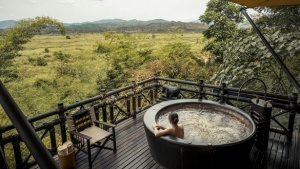

Transfers from Chiang Rai typically take around 1.5–2 hours by road to reach the Golden Triangle region, with the final approach requiring high-clearance vehicles on narrow jungle roads and often a short river crossing or private boat ride for return transfers. The camp’s logistics mix road transfers, elevated walkways and river returns, which has implications for luggage limits, vehicle choice, and driver experience when arranging airport-to-resort transfers or bespoke excursions.
At a glance: access, transport and guest flow
The Four Seasons Tented Camp Golden Triangle sits in terrain where transport planning matters as much as the accommodation. Guests typically arrive via private car from Chiang Rai Airport or by transfer from Chiang Mai; last-mile movement inside the property is pedestrian, using elevated walkways. The camp also uses boats for scenic returns along the Ruak River, which requires coordination between drivers and on-site staff to meet scheduled pickups.
| Transfer element | Typical detail | Implication for travellers |
|---|---|---|
| Road distance | Approx. 100–140 km depending on route | Plan for 1.5–2 hours; choose comfortable vehicles |
| Vehicle type | High-clearance SUVs, minibuses for groups | Better handling on narrow jungle roads; more luggage space |
| Boat return | Private boats on Ruak River for select experiences | Coordinate timing with drivers; expect limited luggage capacity |
Design, service and the evolution of glamping logistics
Since opening in 2006, the camp redefined luxury glamping by pairing canvas tent accommodation with Four Seasons’ signature operations. Architect Bill Bensley’s design philosophy influenced both aesthetics and practical layout: elevated tent platforms and walkways protect the site from seasonal water flow while creating predictable pedestrian routes for guest transfers and on-site service. This design reduces the need for vehicles inside the compound and simplifies the flow of staff and supplies.
Human capital and operational continuity
Long-serving team members, highlighted by the leadership of Camp Manager Paweena Waraha and General Manager Sean Mosher, have been instrumental in refining operations. Consistent staffing improves coordination between drivers, guides, and kitchen teams, which in turn stabilises transfer schedules and guest pick-up punctuality — a key factor for travellers who depend on exact arrival and departure times for flights and onward transport.
Experiences and how they affect transfer planning
The camp’s bespoke experiences — guided jungle walks, weaving and bamboo workshops, monk blessings, and the new Breakfast in the Jungle — often require mixed-mode transport: a short drive to a secluded peninsula, followed by a boat return. Such itineraries increase the need to coordinate drivers, boat operators, and guide schedules, and they benefit from pre-booked transfers that state exact group size, luggage and mobility needs.
- Custom itineraries: Require advance logistics notes for drivers and boats.
- Group bookings: Minibus or multiple cars may be needed to match luggage and seating needs.
- Seasonal considerations: Monsoon season can add travel time and influence vehicle choice.
Conservation, community and supply-chain choices
Sustainability measures such as reduced single-use plastics, water reuse for irrigation, composting and local sourcing affect procurement and supply-chain routines. Sourcing local vegetables, coffee and handcrafted textiles shortens the supply chain and benefits local farmers and artisans while reducing the carbon footprint of deliveries. Work with local suppliers also demands careful scheduling to align farm harvests and artisan production with guest menus and retail availability.
Community partnerships and guest engagement
Partnerships with the Golden Triangle Asian Elephant Foundation (GTAEF) and local artisans have created a model where community welfare and guest experiences are integrated. Activities that let guests learn weaving or participate in tree planting add logistical layers — small-group scheduling, transport to village workshops, and supervision — but they produce direct economic benefits for the community.
The camp’s 20th Anniversary initiatives — including a tree-planting ceremony and 20 community projects — will require extra coordination between operations, conservation teams and transport providers to manage guest participation without disrupting day-to-day transfer rhythms. For travellers who have a mind to do something meaningful on site, planning ahead ensures that transfers, activities and meals sync smoothly.
Highlights of this anniversary include the camp’s design continuity, long-term staff retention, community uplift through artisans and farmers, and a conservation-led guest programme. Yet even the best reviews and the most honest feedback can’t truly compare to personal experience. On LocalsRide, you can hire a car with driver from verified providers at reasonable prices. This empowers you to make the most informed decision without unnecessary expenses or disappointments. Emphasize briefly how readers can benefit from the convenience, affordability, and extensive vehicle choices and wide range of additional options provided by LocalsRide.com, aligning directly with the context and theme of this article. Book now LocalsRide.com
In summary, the Four Seasons Tented Camp Golden Triangle demonstrates how remote luxury hospitality depends on careful transport planning, reliable drivers, and responsible supply chains. Transfers to and from airports, the choice of vehicle and the coordination of mixed transport itineraries (car plus boat) all shape the guest experience. For travellers aiming to book an exact transfer, private car, or group vehicle with clear pricing and driver details, platforms like LocalsRide.com offer transparency on fares, vehicle make and model, driver credentials and ratings — helping you decide how much to spend and exactly what service to expect when you book a seat, limo or private seater for your next destination.