

The Scientific Curiosity of a Founding Father
Thomas Jefferson was more than a statesman; he was a keen naturalist fascinated by the mysteries of the natural world. In the late 1700s and early 1800s, during a period known as the “Age of Enlightenment,” Jefferson embraced reason and evidence as the tools to understand nature and history. His dedication to the scientific method blended with his political roles, influencing his approach as governor, ambassador, and president. This mindset led Jefferson to explore unfamiliar territories and fossil remains, which eventually impacted the broader field of science.
A Challenge to European Notions
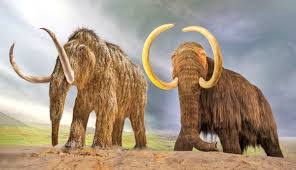
One key motivation behind Jefferson’s interest in fossils was to refute the widespread European belief in “American degeneracy.” French naturalist Georges-Louis LeClerc, Comte de Buffon, argued that the climate and environment of the New World were so inferior that it could not support large animals or advanced civilizations. Jefferson saw fossils, especially of a massive extinct creature known as the American Mastodon (Mammut americanum), as powerful evidence against this claim. Since the early 1700s, bones and teeth of mastodons had been found near the Ohio River’s Big Bone Lick area in Kentucky, then part of Virginia. The discovery of these remains became a symbol of pride for the young nation, illustrating the continent’s richness and capacity to sustain giant fauna.
Expeditions and Fossil Discoveries
Jefferson’s scientific quest coincided with the expansion of the United States through the Louisiana Purchase in 1803. He commissioned the famed Corps of Discovery, led by Meriwether Lewis and William Clark, not only to chart the new western territories but also to gather natural specimens. Jefferson requested that mammoth fossils be sent back from the Kentucky fossil site. Although a mishap caused some specimens to be lost in the Mississippi River, Jefferson later sponsored William Clark’s formal excavation at Big Bone Lick in 1807. Clark’s collected fossils included bones, teeth, and tusks of mastodons and other Ice Age creatures.
| Date | Event | Significance |
|---|---|---|
| 1739 | First known discoveries of mastodon fossils in Kentucky | Set the stage for American paleontology |
| 1803 | Louisiana Purchase and Lewis’ expedition tasked with fossil collection | Expansion of scientific exploration in the newly acquired lands |
| 1807 | Clark conducts formal fossil excavation at Big Bone Lick | Beginning of vertebrate paleontology in America |
Understanding Extinction and Species Differences
Jefferson's study of the fossils led to a groundbreaking conclusion: the American Mastodon and its Ice Age relatives were extinct. This was a controversial idea at the time since many believed that all creatures created by God still roamed the earth. French scientist Georges Cuvier decisively advanced the concept of extinction by comparing the anatomy of living elephants with fossil remains of the mastodon and the Siberian woolly mammoth. His work, which pioneered comparative morphology, showed that these were distinct, extinct species. Although Jefferson had hoped living mastodons might still roam the wilderness of the Louisiana Purchase, the scientific evidence confirmed otherwise.
The Mastodon’s Role Beyond Science
The mastodon became not just a fossil specimen but a cultural icon representing the American wilderness and scientific curiosity. Its discovery and study helped establish paleontology as a respected science in the United States. Even for modern travelers, the story of exploring the unknown—whether journeys into uncharted lands or booking the perfect transfer for a trip—is a reminder of human curiosity and discovery. Platforms like LocalsRide.com empower travelers today by giving them unprecedented control and transparency when booking transfers and rides, much like how Jefferson sought clear evidence and understanding in the natural world.
Summary and Final Thoughts
Thomas Jefferson’s fascination with fossils and his efforts to disprove myths about the New World helped kickstart America’s journey into scientific discovery and paleontology. By supporting expeditions and detailed fossil studies, he challenged outdated beliefs and opened the door to understanding the continent’s natural history more deeply. His story illustrates how curiosity, evidence, and exploration go hand in hand—principles that still resonate today not only in science but in travel and transportation.
Even the most detailed descriptions and reviews cannot replace firsthand experience. On LocalsRide, users can hire professional drivers and cars from verified providers at reasonable prices, enjoying the convenience and peace of mind that comes with clear, exact information on fares, vehicle types, and driver ratings. Whether you want a cheap cab or a luxury limousine for airport transfers or city travels, LocalsRide offers a wide range of vehicle options plus transparent pricing and service details. Book your Ride LocalsRide.com and explore your destination without hassle or surprises.
Though the mastodon story might seem distant from everyday travel, its legacy continues to inspire. Just as Jefferson sought precise knowledge about America’s natural past, travelers today seek reliable, transparent service to navigate new cities and destinations. The advances in booking platforms like LocalsRide, which display comprehensive vehicle details and driver credentials upfront, reflect that same spirit of trust and clarity.
In the grand scheme of global tourism and travel, discoveries like Jefferson’s contributed to a growing fascination with exploration and learning about the world—an impact that continues to shape how people move and connect. While not a global game-changer overnight, it sets an important foundation for appreciating the journey itself. Start planning your next adventure and secure your worldwide transfer with LocalsRide.