
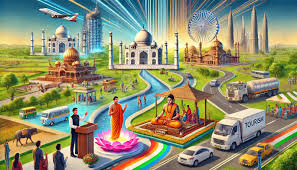

Unlocking the Potential of India’s Tourism Sector
India is setting its sights on becoming a global economic powerhouse by 2047, with tourism playing a pivotal role in this transformation. The vision of boosting tourism to unprecedented levels carries immense promise but rests on one critical factor: effective implementation of well-crafted policies and infrastructure development.
The Mixed Recovery of Tourism Post-Pandemic
The aftermath of the Covid-19 pandemic has shown that recovery in tourism isn’t a uniform story. Globally, some destinations have regained ground while others continue to lag. India has seen a notable bounce back in its hospitality industry, even surpassing pre-pandemic performance indicators. However, foreign tourist arrivals remain relatively flat, largely balanced out by a surge in domestic tourism—which itself is expected to skyrocket to 15 billion trips by 2047 from today’s 25 million.
Looking ahead, India’s tourism economy is projected to climb from the world’s 10th to the 8th largest by 2025 and potentially to 4th place over the next decade according to prominent global travel councils. This upward trajectory highlights tourism’s growing contribution to GDP and employment, reinforcing its position as a key economic engine.
Policy and Vision: Steering Tourism Toward 2047
Despite the absence of a new tourism policy since 2002, strategic direction is gradually taking shape. The government has unveiled ambitious targets such as attracting 100 million foreign tourists and building a $3 trillion tourism economy that contributes 10% to the national GDP by 2047. Mission-mode approaches and strong public-private partnerships are slated to play a foundational role, with an emphasis on developing 50 iconic destinations that bring communities into the tourism fold.
Yet, these visions hinge heavily on decisive action. Currently, varied state policies and procedural inconsistencies create a fragmented landscape where uniform tourism growth is a challenge. Unlocking India’s full tourism potential demands not just new ideas, but a rigor in implementation that aligns local, state, and national efforts seamlessly.
Challenges in Destination Diversification
One pressing concern is the concentration of tourists in about five or six states that receive roughly 60% of visits. If this trend continues unchecked alongside projected tenfold increases in tourist numbers, these destinations risk becoming overwhelmed and unsustainable. Spreading tourist interest to underdeveloped regions is not only wise but necessary for ecological balance and long-term viability.
| Challenge | Current Status | Desired Outcome |
|---|---|---|
| Tourist Concentration | 5-6 states hold 60% visits | More evenly spread tourist flows |
| Accommodation Supply | 1.8 lakh branded & 1.65 million unbranded rooms | 4 lakh branded & 2.8 million rooms needed |
| Regulatory Approvals | 49 pre-construction & 27 pre-opening licenses | Simplification and rationalisation of approvals |
| Transport Connectivity | High reliance on road and air, limited airport infrastructure | Infrastructure enhancement across road, rail, air |
The Accommodation Gap and Industry Response
Meeting the anticipated surge in tourists means addressing the shortfall in accommodation options. Currently, India has around 1.8 lakh branded hotel rooms, far below the estimated requirement of 4 lakh to keep up with demand. The informal sector with 1.65 million unbranded rooms also falls short of the needed 2.8 million rooms. Expanding capacity will require significant new investments, which the hospitality industry is eager to undertake.
However, bureaucratic obstacles remain a stumbling block. The multiple layers of pre-construction and pre-opening licenses can discourage investors and delay projects. Streamlining these permits, standardizing tax and regulatory regimes across states, and officially recognizing tourism and hospitality sectors as eligible for infrastructure and industry status would catalyze growth.
Transport and Connectivity: The Backbone of Tourism Growth
Transport plays a decisive role in travel convenience and destination accessibility. About 80% of domestic travelers rely on road transport, and 83% of foreign visitors arrive by air. As tourist numbers soar, the synergy between air, road, and rail infrastructure becomes indispensable. Enhancements in airports, regional airports, and connectivity networks are underway but need to accelerate to meet future demands efficiently.
Why This Matters for Taxi and Transfer Services
As tourism flourishes, so does the demand for reliable local transport, including taxis and transfers. Efficient ground transport networks link airports, hotels, attractions, and towns, smoothing out the visitor experience. Platforms like LocalsRide.com allow travelers to pre-book vehicles tailored to their group size and preferences, view exact car models and driver ratings, and guarantee transparent pricing. This kind of service is crucial as visitor numbers expand and destination diversification demands adaptable transport solutions.
The Road Ahead: Highlights and Considerations
- India’s tourism has great economic potential but requires focused policy execution and infrastructure growth.
- Distribution of tourists must be balanced to avoid overburdening certain destinations.
- Accommodation capacity needs a major boost, supported by streamlined regulations and investment incentives.
- Transport development is critical for accessibility, directly impacting taxi and transfer services.
- Digital platforms offering transparent and personalized taxi and transfer bookings will be vital in enhancing traveler convenience.
While reviews and feedback provide guidance, the true test of tourism or transfer service quality comes from personal experience. With LocalsRide, travelers can hire vehicles driven by verified providers at reasonable fares, eliminating guesswork and helping secure the best rides without overspending or surprises. The extensive range of vehicles—from private cabs to larger seaters—combined with the transparency of prices, licenses, and driver profiles creates an unparalleled booking experience.
Get the best offers LocalsRide.com offers for your next trip!
Conclusion
India’s journey to becoming a leading tourism destination demands not just lofty goals but the nuts and bolts of reform and development across hospitality, accommodation, and connectivity. Addressing policy roadblocks, optimizing infrastructure, and distributing tourist footfall will build a sustainable future for the sector. For travelers navigating this expanding landscape, reliable and transparent transport services hold the key to a smooth and memorable experience. Platforms like LocalsRide.com provide exactly that — a simple, user-friendly interface to book exact vehicle makes, know driver ratings, and access competitive prices worldwide, reinforcing convenience and confidence in every trip from airport transfers to city journeys and back.