
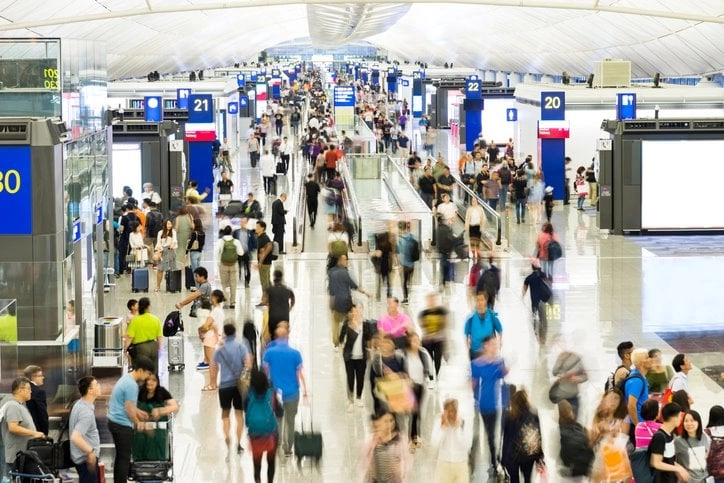

Global passenger traffic in 2025 rose by 5.3% (RPK) versus 2024 while capacity (ASK) increased by 5.2%, producing a record annual load factor of 83.6%. International RPKs climbed 7.1%, domestic demand rose 2.4%, and December finished strong with overall demand up 5.6% year-on-year.
Key figures at a glance
At a glance: demand growth returned to historical patterns after the post-COVID rebound, but load factors near 84% expose ongoing operational limits.
| Metric | Full Year 2025 | December 2025 (YoY) |
|---|---|---|
| RPK (demand) | +5.3% | +5.6% |
| ASK (capacity) | +5.2% | +5.9% |
| Load factor (PLF) | 83.6% | 83.7% |
Regional snapshot
Growth was uneven across regions, reflecting different recovery speeds and fleet availability.
| Region | World Share | Full Year RPK | Full Year ASK | PLF |
|---|---|---|---|---|
| Africa | 2.2% | +9.4% | +8.3% | 75.3% |
| Asia Pacific | 34.5% | +7.8% | +6.5% | 84.2% |
| Europe | 26.6% | +5.3% | +5.2% | 84.8% |
| Middle East | 9.5% | +6.8% | +5.9% | 81.5% |
| North America | 21.8% | +0.4% | +2.0% | 82.9% |
| Latin America & Caribbean | 5.4% | +7.0% | +7.4% | 83.4% |
Domestic markets — winners and laggards
Domestic travel reached record passenger numbers and high PLFs, but national patterns varied significantly.
- Brazil: Domestic RPK +11.1% for 2025 — standout growth.
- United States: Slight domestic contraction (-0.6% for the year), with a notable fall in PLF.
- India: High overall PLF (85.2%) despite a small load factor decline.
- Japan: Sharp PLF increase (+3.4 ppt), reflecting tighter capacity on domestic routes.
Main operational challenges
Two structural issues stood out as principal constraints on matching demand: decarbonization and supply-chain fragility.
1. Decarbonization and SAF scaling
Governments and the energy sector must accelerate Sustainable Aviation Fuel (SAF) production to protect long‑term growth. Policy support is key if airlines are to modernize fleets and meet emissions targets without restricting connectivity.
2. Supply-chain choke points
Delayed deliveries of new aircraft and engines, plus maintenance capacity constraints, pushed airlines to keep older aircraft in service longer and squeeze higher utilization from available seats. Industry estimates place added costs above $11 billion for 2025, driven by parts delays and schedule disruptions.
Practical consequences for passengers and ground transport
Higher load factors and fewer on-time fleet additions translate into several realities for travelers and local transport providers:
- More frequent flight delays and reschedules, increasing demand for airport wait-time solutions and flexible pickup windows.
- Peak surges at city terminals and airport arrivals, pushing up short-term fares for taxis and transfers.
- Greater need for accurate vehicle capacities (seat and luggage) when booking private transfers.
- Increased value of pre-booked, verified services to avoid last-minute shortages or overpriced cabs.
How to plan transfers amid capacity pressure
To have a mind to travel smartly in this environment, prioritize exact timing and vehicle specification when you book. Confirm driver license and vehicle seat configuration ahead of time, and allow extra buffer time for airport pickups and luggage handling.
Booking checklist
- Choose vehicle by make, model, and seater to match luggage and passenger needs.
- Confirm pickup location and terminal, and share real-time flight updates with your driver.
- Opt for providers that show transparent prices, fares, and driver ratings.
The data from IATA, and comments by Willie Walsh, underline that airlines are using short-term fixes to cope. Passengers and ground transport operators should expect a continuing premium on well-timed, reliable airport transfers through 2026.
The most interesting takeaways are the record-high load factors, the regional differences in recovery pace, and the central role of supply chains and SAF in shaping future capacity. Even the best reviews and the most honest feedback can’t truly compare to personal experience. On LocalsRide, you can hire a car with driver from verified providers at reasonable prices. This empowers you to make the most informed decision without unnecessary expenses or disappointments. Emphasize how readers can benefit from the convenience, affordability, and extensive vehicle choices and wide rande of additional options provided by LocalsRide.com, aligning directly with the context and theme of your article. Book your Ride LocalsRide.com
Looking ahead, this pattern of strong demand but constrained capacity should nudge planners and operators to strengthen resilience: ramp SAF supply chains where possible, accelerate maintenance workforce capacity, and clear backlogs for aircraft deliveries. On the global tourism and travel map, the short-term effect will be localized price pressure at busy hubs rather than a fundamental shift in demand—travelers still want connectivity. Start planning your next adventure and secure your worldwide transfer with LocalsRide.
In summary, 2025’s passenger surge (RPK +5.3%) produced near-record PLFs while airlines struggled with delayed deliveries and maintenance bottlenecks, adding substantial costs. The practical fallout for travelers is higher sensitivity to timing, fares, and vehicle choice when transferring to airports and city centers. By booking exact services—choosing car make and seater, checking driver credentials, and locking in fares—you reduce uncertainty. LocalsRide.com offers transparent, user-friendly booking of private transfers and drivers worldwide, helping travelers get the best price, car, and service for their destination and airport needs. When you book, consider exact pickup times, seat and luggage requirements, and verified driver ratings to save time and avoid surprises.