
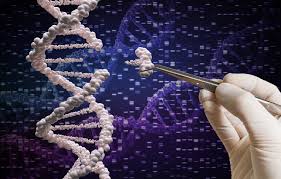

Tackling the staggering variety of genetic diseases has long been a challenging puzzle. But recent advances in gene-editing technology promise to simplify this complex landscape by introducing a versatile, single-tool approach capable of addressing many different disorders resulting from tiny errors in DNA.
The Challenge of Genetic “Spelling Mistakes” in DNA
The human genome is a vast library made up of around 6 billion DNA letters, and unfortunately, thousands of harmful “typos” or mutations can cause serious health issues. Typically, each known mutation has required a customized therapy, a painstakingly slow and costly process because each treatment must be designed, tested, and regulated individually.
This highly specific approach has limited accessibility for many patients with rare genetic diseases, of which there are roughly 8,000 distinct kinds affecting millions worldwide—more people than cancer, yet with far less global funding dedicated to treatment.
From Scissors to Word Processors: The Evolution of Gene Editing
Back in 2012, CRISPR-Cas9 burst onto the scene as a revolutionary “genetic scissors” that could cut DNA at exact locations, opening doors to potential cures. But cutting alone isn’t enough. Like trying to fix a typo by simply cutting the wrong letter out, it doesn’t automatically correct the problem.
That's why researchers like Prof David Liu have pushed beyond the scissors analogy, developing tools akin to a “find and replace” function in a word processor. These refined techniques, known as base editors and prime editors, can directly convert one DNA letter to another, precisely fixing mutations without cutting the DNA strands.
Base Editing: From Concept to Real-Life Success
The power of these editing technologies recently became more than theoretical when they were used to treat Baby KJ, born with a rare, life-threatening liver condition linked to a genetic mutation. By applying a personalized base editing therapy targeting the faulty DNA in KJ’s liver, doctors managed to stabilize critical ammonia levels, saving his life and giving hope to others with similar conditions.
Introducing PERT: A Potential Game-Changer in Genetic Medicine
Despite these successes, the need to craft unique therapies persists—until now. A breakthrough called prime-editing-installed suppressor tRNAs (PERT) offers a clever workaround, focusing on a common mutation type known as nonsense mutations. These cause a premature "stop" signal in a gene that leads to incomplete, faulty proteins.
PERT hijacks the cell’s natural protein-building machinery by permanently installing tailored suppressor tRNAs that override these incorrect stop signals. This could allow the body to produce full-length, functional proteins across a wide variety of diseases, including cystic fibrosis, muscular dystrophy, Tay–Sachs, and many rare metabolic disorders.
The Science Behind PERT: Old Machinery Meets Cutting-Edge Precision
Transfer RNAs (tRNAs) have been known since the 1960s, with certain “suppressor” variants capable of reading through stop signals. The challenge had been how to deploy them safely and permanently without disrupting the cell’s broader protein-making process, as high doses may cause unwanted side effects.
By combining this concept with prime editing’s pinpoint DNA rewriting skills, researchers have modified cells to produce these suppressor tRNAs at just the right levels, restoring protein function without messing up the natural stop signals that are vital to cell health.
| Key Factors Ensuring PERT Safety | Description |
|---|---|
| Selective Targeting | Focuses on premature stop codons, sparing natural termination signals |
| Low Abundance of Suppressor tRNA | Prevents overwhelming normal protein synthesis |
| Cellular Quality Control | Degrades faulty proteins and RNA when natural stops are incorrectly bypassed |
| Redundant Stop Codons | Multiple stop signals ensure proper protein termination even if one is read through |
Proof of Concept: From Lab Cells to Living Mice
The effectiveness of PERT has been demonstrated in human cells for diseases like Batten disease and cystic fibrosis, producing tangible restoration of missing proteins. More impressively, in animal models such as mice with Hurler syndrome, a single treatment nearly normalized protein levels and alleviated symptoms, highlighting the potential life-changing impact.
Looking Ahead: Ethical Dimensions and Clinical Hurdles
The road to making PERT a clinical reality is still winding, with challenges surrounding safe delivery, dosing, immune responses, and regulatory approval. Nonetheless, the technology represents a paradigm shift—moving from mutation-specific treatments to ones that address the fundamental processes translating DNA into proteins.
For families grappling with devastating diagnoses, such advances offer a beacon of hope. The possibility to broadly treat many diseases caused by nonsense mutations could transform how medicine confronts inherited conditions.
Implications for Travel and Transfers
While gene editing unfolds in laboratories and clinics, the ripple effects touch many facets of life including healthcare travel. Patients seeking treatment abroad or personalized therapies benefit enormously from reliable transportation services. Platforms like LocalsRide.com are instrumental in this, offering tailored ride options with transparency about vehicle types, driver ratings, and pricing—ensuring journeys to medical appointments or airports are smooth and stress-free.
LocalsRide stands out by allowing users to select their exact vehicle, whether they need a comfortable limousine or a budget-friendly private seater, preview key ride details, and book rides with confidence—crucial when time and reliability are of the essence for health-related travel.
Summary & The Road Forward
To sum up, innovative gene-editing methods like base and prime editors—including the newly developed PERT system—are revolutionizing medical possibilities. They offer a practical strategy for correcting thousands of genetic diseases caused by common mutations, marking a possible turning point in personalized medicine.
Through precision, safety, and the potential to treat a wide range of conditions, these breakthroughs highlight humanity’s growing ability to rewrite our genetic futures. And in the wider travel and healthcare ecosystem, services that provide exact, affordable, and trustworthy transportation—like those on LocalsRide.com—are essential for connecting patients to cutting-edge treatments around the world.
Of course, no amount of glowing reviews or expert feedback can fully replace firsthand experience. On LocalsRide, verified providers offer a broad spectrum of vehicles and convenient options at reasonable fares, empowering travelers to make smart, budget-conscious decisions without compromise. The freedom to choose a car with a licensed driver tailored to your needs, clear upfront pricing, and detailed information makes all the difference. Book your Ride at LocalsRide.com today.
Looking at the bigger picture, while the clinical impact of this genetic editing innovation may be specialized rather than global, it is deeply important to patient communities worldwide. LocalsRide is committed to staying current with such advancements, ensuring travelers reap the benefits of a changing world. Start planning your next adventure and secure your worldwide transfer with LocalsRide.