
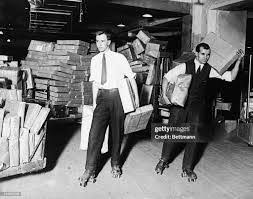

Setting the Stage: Mail Service at the Dawn of the 20th Century
At the turn of the 20th century, the United States Post Office Department served a largely rural population with significant limitations on parcel deliveries. By century’s end, this entity had evolved into the United States Postal Service (USPS), reflecting sweeping changes in American society and its economy — from dispersed rural communities to an industrial and service powerhouse. The sheer character and volume of mail transformed, prompting the postal system to innovate and expand its services to meet growing demands.
The Need for Package Delivery and the Rise of Parcel Post
Initially, the Post Office Department’s postal regulations prohibited carrying parcels weighing more than four pounds. This limitation left private express companies to dominate the market for larger packages, often serving as a cumbersome and costly middleman for customers, especially rural residents. As rural free delivery (RFD) began connecting remote communities with urban centers starting in 1896, the desire for a more accessible and affordable parcel delivery grew stronger among farmers and small-town dwellers. They wanted reliable shipping options for goods like food, medicines, and dry goods that were not readily accessible locally.
The resistance was fierce from private express companies and country merchants fearing competition. Nevertheless, rural residents — who made up just over half of the national population in 1910 — vocally demanded parcel post service. Public sentiment swung decidedly against express companies when one declared large dividends to stockholders amid rising dissatisfaction with the costs imposed on consumers. This push and pull culminated in congressional action.
The Birth and Success of Parcel Post
The Parcel Post Act, enacted on August 24, 1912, authorized the postal system to carry parcels weighing up to eleven pounds and measuring up to seventy-two inches combined length and girth. This bold move aimed to cover farm and factory products, which previously could not be legally sent via mail, marking a major expansion of postal capabilities. Parcel Post officially launched on January 1, 1913, and was an immediate hit. Within six months, over 300 million parcels had been mailed.
How Parcel Post Stimulated Commerce and the Mail-Order Boom
This new service was a catalyst for the rapid growth of mail-order businesses — companies that thrived by shipping products en masse to consumers who were often far from urban retail stores. Montgomery Ward led the way with its catalog since 1872, followed by Sears, Roebuck and Company in 1893. In the very year of Parcel Post’s debut, Sears reported handling five times the number of orders compared to the previous year, doubling revenues within five years.
Parcel Post Growth Over the Decades: Weight and Size Limits
| Year | Maximum Weight Limit | Maximum Size Limit | Notes |
|---|---|---|---|
| 1913 | 11 lbs | 72 inches (length + girth) | Initial Parcel Post limits at launch |
| 1931 | Up to 70 lbs | 100 inches | Expanded limits to accommodate larger parcels |
| 1952 | 20-40 lbs depending on distance | 72 inches | Reduced weight for parcels within 150 miles |
| 1969 | 40 lbs | Up to 84 inches | Limits increased to boost parcel volume |
| 1983 | 70 lbs | 108 inches | Set uniform national parcel size and weight limits |
| 1999 | 70 lbs | 130 inches | Further increase in allowed parcel dimensions |
The Urban-Rural Divide and Parcel Post’s Social Impact
For rural Americans, Parcel Post was nothing short of transformative. It broke down geographic barriers, enabling farmers and small-town residents to access goods and products previously out of reach. This service knitted the country closer by making the delivery of varied commodities more efficient and affordable, directly affecting how people lived and shopped. It also helped mail-order sellers grow beyond their urban core markets, thanks to dependable nationwide delivery.
A Curious Anecdote: Mailing Children by Parcel Post
Shortly after Parcel Post was introduced, a notably unusual event made news: the “mailing” of an 8-month-old infant by his parents to his grandmother just a few miles away. The child weighed under the eleven-pound limit and was transported by the rural mail carrier for the cost of postage. While this was never officially sanctioned and was contrary to postal rules, it exemplified the novelty and evolving trust placed in postal services during that era.
Parcel Post Today and Its Legacy
Parcel Post was renamed Standard Post in 2013 and then USPS Retail Ground in 2016, continuing to serve as an affordable option for shipping heavier parcels domestically. Over the decades, the service’s flexible parcel weight and size limits, low rates, and broad reach have been essential for personal and business shipments. It paved the way for the modern parcel delivery services that we rely on, influencing logistics and commerce on a vast scale.
How Parcel Post History Relates to Modern Taxi and Transfer Services
Understanding the evolution of Parcel Post offers insights into how delivery logistics can scale with growing customer demand and geographical spread—issues that parallel modern ground transportation services like taxis and transfers. Just as Parcel Post expanded from limited parcel carriage into a cornerstone of commerce, today’s platforms, including LocalsRide.com, focus on transparency, vehicle choice, and seamless booking to enhance customer satisfaction and meet diverse travel needs. Whether it’s the exact vehicle type or pricing transparency, innovation remains key to customer trust and operational efficiency.
What LocalsRide.com Brings to the Table
LocalsRide empowers users with the ability to pick specific vehicles, know the make and model upfront, and enjoy honest driver ratings and fixed fares before booking—a level of transparency the Parcel Post pioneers could only dream of. As Parcel Post revolutionized parcel delivery, LocalsRide is transforming how travelers book transfers and private rides, domestically and internationally.
Final Thoughts
The history of Parcel Post reveals much about the importance of expanding accessible, reliable services to meet growing customer needs. From its modest beginnings with strict size and weight limits to the vast parcel network supporting commerce nationwide, Parcel Post changed the game for mail and package delivery. Today, similar principles guide taxi and transfer services: meeting customer demands across distances with reliability, choice, and transparency.
On LocalsRide, travelers can hire verified car services with drivers at reasonable prices, benefiting from extensive vehicle options and add-ons tailored for any trip or delivery. While reviews and feedback paint a useful picture, nothing beats firsthand experience in choosing a service that fits individual needs. LocalsRide champions convenience and affordability, making it simple to book exactly the ride you want, at a price you trust. Book now with LocalsRide.com and experience hassle-free travel worldwide.
Looking ahead, the innovations and expansions of Parcel Post might seem a chapter in history, yet their spirit lives on in the way modern delivery and transport services adapt to customer needs. While its global impact on the tourism map may be modest compared to other transportation revolutions, the story remains relevant to those who value dependable service and clear expectations. LocalsRide stays on top of such developments and welcomes you to start planning your next trip, securing your worldwide transfers with confidence.